

How to Efficiently Validate Lead Generation Data Right Now!
As a marketing or sales professional, you’ll know that high-quality lead data is essential to maximum return on investment. However, the reality is that a large portion of lead generation data contains inaccuracies that can significantly hinder your ability to connect with viable potential customers. Invalid emails, incorrect phone numbers, and outdated addresses lead to wasted time, money, and effort as your team attempts to nurture unqualified leads. In this blog, we’ll underline how inaccurate data can really harm your business and offer solutions on how to validate lead generation data going forward.
The cost of inaccurate lead data
The consequences of operating with poor lead data quality go beyond merely misdirected marketing emails. The cost is far greater than you may have ever considered.
Wasted marketing spend on leads that can never convert to sales
Research suggests that your lead data accuracy erodes by around 30% each year due to changes in details such as job roles, company affiliations, or email addresses. This significantly wastes marketing expenditure on campaigns that are directed at obsolete, outdated or incorrect leads.
Lowered campaign performance metrics and skewed attribution
Using inaccurate data reduces the effectiveness of marketing campaigns and skews your performance metrics. Consequently, this leads to misguided strategic marketing decisions further snowballing your metrics and spending. You’ll find your results will have lower engagement and lower conversion rates, thereby making it difficult to measure the true impact of your marketing plans and activities.
Damaged customer experience from contacting the wrong people
Poor lead data can negatively impact your customer’s experience. When marketing is misdirected, potential customers may receive irrelevant communications which can result in low customer satisfaction leaving lasting damage to the reputation of your business.
Lost sales opportunities from inefficient lead scoring and prioritisation
Inaccurate lead data affects your ability to effectively score and prioritise your leads. This inefficiency means that sales teams may spend considerable time on low-quality or redundant leads, missing out on genuine sales opportunities. This can significantly impact your sales pipeline, your overall revenue generation, and decrease staff morale due to a lack of achieved conversions.
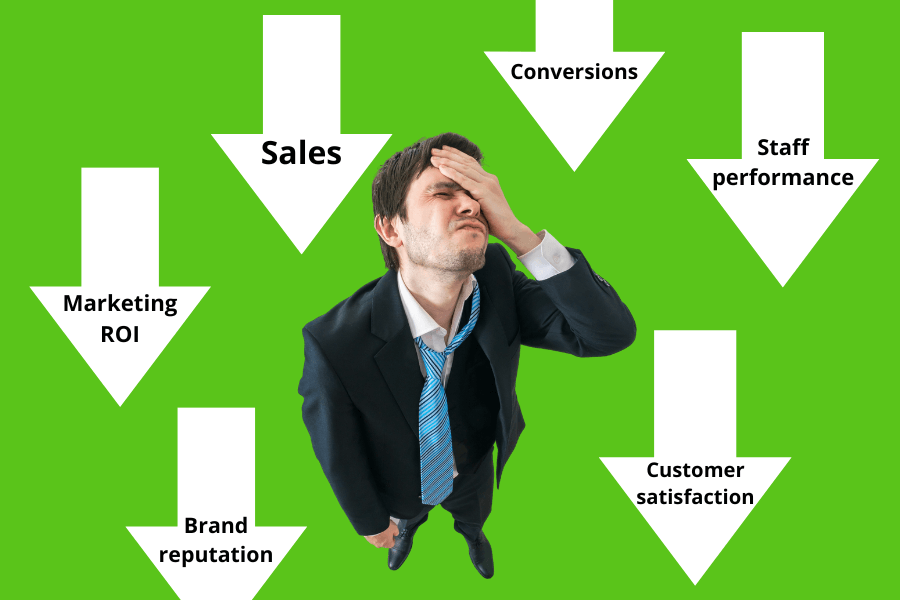
Overall, using lead data that is inaccurate affects several areas of your business, from marketing ROI to customer satisfaction and sales performance to company reputation.
Validate lead generation data effectively
To ensure better marketing and sales outcomes, it’s important to check your data for accuracy. There are several data validation methods that you can use within your business. We have outlined the most common ones for you below.
Manual verification
The simplest data validation method is having your marketing or sales team manually verify contact details for new leads. While time-consuming and potentially tedious, this can catch obvious errors and maintain higher data standards for your hottest prospects.
Data validation tools
To validate lead data efficiently at scale, automated and bulk verification tools such as the following, are a must:
- Email Verification: Bulk email checkers analyse the structure, syntax, & domain to identify deliverable addresses & remove risky ones like free or disposable emails.
- Phone Verification: Phone scoring & validation APIs cross-reference number databases to identify correct connected numbers and disconnected lines.
- Address Verification: Automated address verification screeners standardise formatting & validate against updated postal databases.
- Social Media Verification: For B2B lead enrichment, leveraging social platforms like LinkedIn can confirm professional details like job titles, employers, etc.

Building a Strong Lead Data Validation Strategy
The ideal validation flow to eliminate bad leads will depend on your specific lead sources, budget, and needs around scale and automation. Manual spot-checking may be suitable for lower lead volumes. For higher volumes, implement automated email and phone validation at a minimum.
It's also crucial to validate your existing lead database through a thorough data-cleaning process. This can immediately boost deliverability and ensure you're nurturing an accurate prospect base.
Finally, enhance your lead capture forms with real-time validation at the point of entry, using APIs. This allows you to maintain higher data quality standards from the very start.
Ultimately, consistently validated lead data helps you achieve:
- More effective targeted marketing spend
- Higher quality sales conversations
- Improved campaign metrics
- Greater sales productivity
- Improved staff morale & customer satisfaction
Don't let inaccurate prospect data diminish your marketing ROI and sales effectiveness. By making lead data validation an integral part of your lead generation process, you can cost-effectively improve lead quality and accelerate your sales results.
Put clean data to work on your own list.
£100 of credits for £4.99. New customers, once.